I still remember the "copy-paste injuries" I sustained back in 2012. I don’t mean literal carpal tunnel, although I’m sure that was coming too. I mean the sheer soul-crushing fatigue of spending the last Friday of every month manually pulling SERP data for 20 different clients, pasting them into Excel, screenshotting graphs, and praying that the formatting didn't break when I moved it into a PowerPoint deck.
If you are still doing this, stop. You aren't "curating insights"; you are performing data entry at a premium hourly rate. Let’s talk about how a keyword rank tracker changes the game and why, in 2024, if your data isn't updating automatically, you’re already behind.
What Exactly is a Keyword Rank Tracker?
At its core, a keyword rank tracker is a software tool that monitors the position of your website’s pages for specific search queries on search engines like Google or Bing. Instead of you typing your client’s target keywords into an Incognito window manually—which, let's be honest, never gives you a true, unbiased view because of personalization https://reportz.io/seo-reports/ and location factors—the tool does the heavy lifting.
These tools send automated bots to simulate search queries. They record where your page appears, whether it’s in the top three, page two, or completely missing. They then visualize this data so you can see trends over time. If you’re checking seo keyword positions manually, you’re missing the forest for the trees. You need to see the trajectory, not just a snapshot.
The Frequency Question: How Often Do They Update?
This is the most common question I get from junior account managers. The answer is almost always: keyword rank tracker daily updates are the industry standard for a reason.
Why daily? Because SEO is volatile. If a Google algorithm update hits on a Tuesday, you don't want to wait until your monthly report on the 30th to realize your client’s traffic has tanked. You need to know within 24 hours.
The Reality of "Free" or Low-Quality Tools
You’ve probably noticed that some cheaper trackers are slow or break constantly. That’s usually because they aren't sophisticated enough to handle Google’s defenses. When a tool tries to scrape data too aggressively, Google throws a reCAPTCHA at them. If the tool provider doesn’t have the infrastructure to bypass or manage those blocks effectively, your data goes stale. That’s why I steer clear of tools that hide their backend reliability—if they can’t handle a simple reCAPTCHA, they’re useless for a professional agency.
Manual Reporting vs. Automated Efficiency: The Math
Let’s do the math, because if you aren't doing it, your agency margin is suffering.
Activity Manual (Hrs/Month) Automated (Hrs/Month) Pulling Rank Data 4 0 Creating Visuals/Charts 3 0 Formatting Slides/PDFs 2 0.5 (Review only) Total 9 Hours 0.5 HoursIf you have 10 clients, you are spending 90 hours a month on reporting. That is over two full work weeks wasted on non-billable, repetitive tasks. If your internal labor rate is $50/hr, that's $4,500 a month in "copy-paste tax." Switching to an automated system like Reportz doesn't just save you time; it buys you the ability to actually look at the data and offer strategic advice, which is what clients are actually paying for.
Why All-In-One Dashboards Win
Clients don't care about your rank tracker. They care about business outcomes. They want to know how those seo keyword positions correlate to actual leads and sales. This is why you need a platform that pulls from multiple sources—not just a rank tracker, but GA4, Search Console, Facebook Ads, and Google Ads.
When you use a tool like Reportz.io, you’re aggregating data into a single point of truth. You aren't sending a link to a rank tracker, a separate PDF for GA4, and an email for PPC. You’re sending one branded, white-label dashboard.
White Labeling and Branding Control
If I see one more agency sending reports with the logo of their SEO tool on the header instead of their own agency logo, I might retire early. You are the expert. Your reports should reflect your brand, not the vendor’s. Professional reporting tools allow you to strip away the "vendor noise" and put your agency’s identity front and center. It builds trust, and it makes you look like a partner, not a reseller.
When a Tool Doesn't Have the Integration You Need
One of the biggest frustrations in agency ops is finding the "perfect" tool, only to realize it doesn't plug into that one niche CRM or ad platform your client uses. When evaluating software, look for responsiveness.
I’ve been part of the Facebook group communities for various reporting platforms, and it’s a great way to gauge their development roadmap. If you have a legitimate need for an integration, you should be able to request it. At Reportz.io, for instance, the focus is on building what agencies actually need, rather than forcing you into a rigid, one-size-fits-all box.
Final Thoughts: Don't Get Pretty, Get Practical
I’ve seen reports that look like pieces of modern art—beautiful gradients, custom fonts, gorgeous animations—that answer absolutely zero questions about performance. My golden rule: If you can’t look at the dashboard and answer "What should we do next?" in under 60 seconds, it’s a bad report.
Stop chasing manual screenshots. Stop pasting data into PowerPoint. Stop worrying about formatting breaks. Use a tool that handles the rank tracking automatically, keeps your data fresh, and integrates with the rest of your marketing stack. Your sanity, and your agency’s profit margin, will thank you.
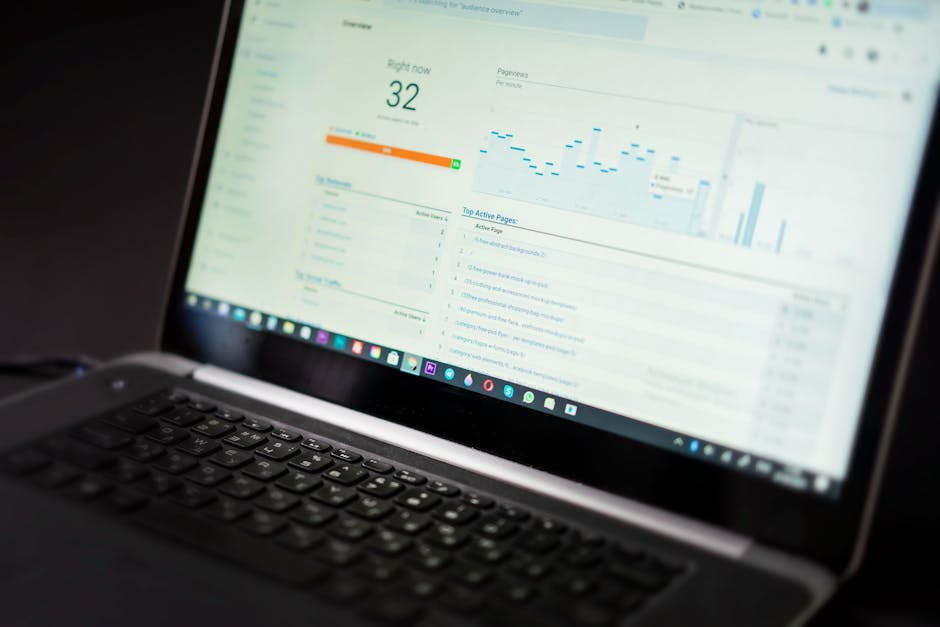
If you’re ready to stop the copy-paste madness, look for a solution that prioritizes rank tracking reporting that is as accurate as it is fast. Because at the end of the day, an agency lead's job isn't to be a data processor—it’s to be an engine for client growth.
